(And Why Blockchain Actually Matters)
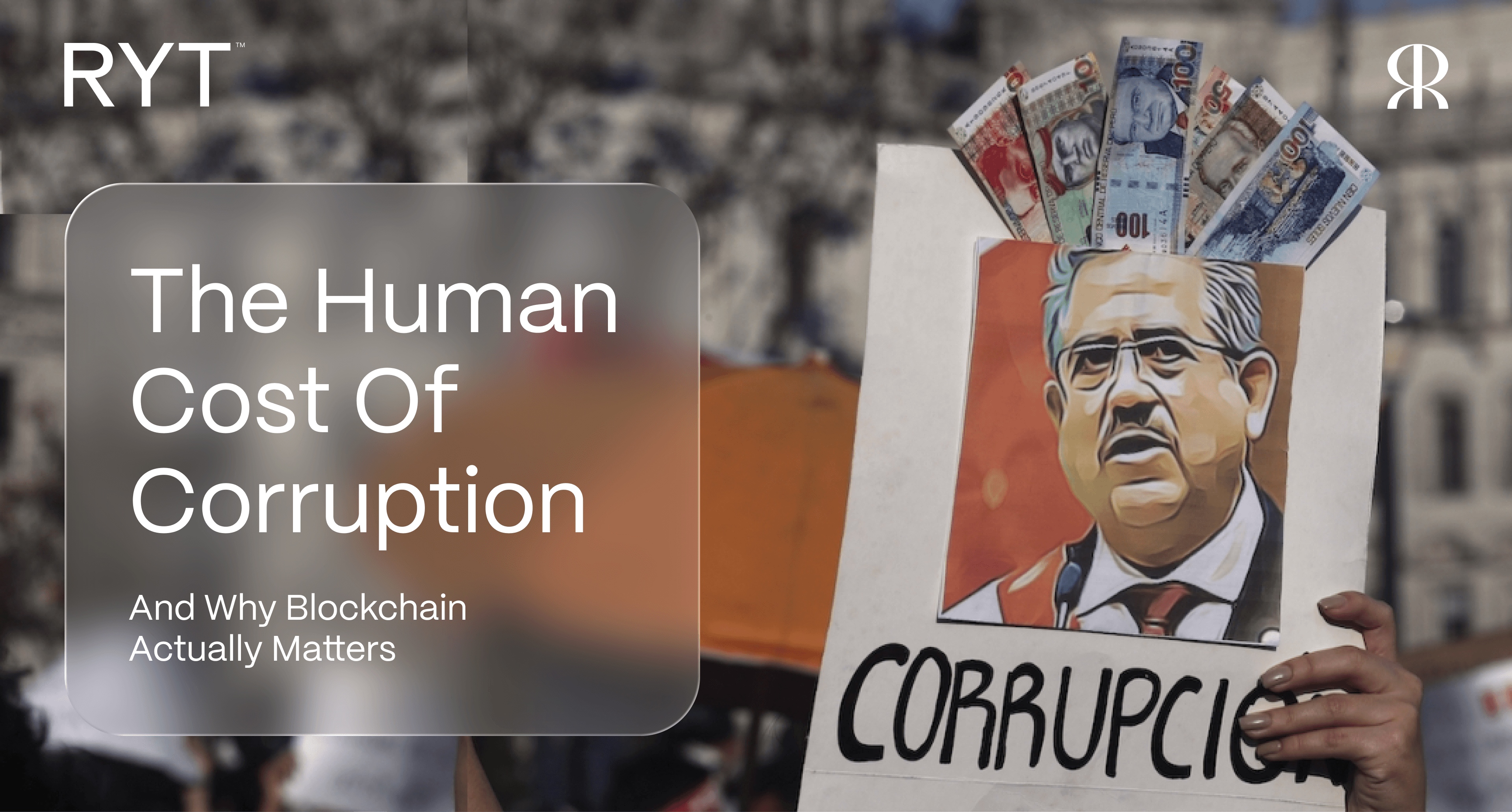
The Human Cost of Corruption
Corruption isn't an abstract policy problem. It's a tax on the people who can least afford to pay it.
More than 56 million people across Latin America have to pay a bribe just to access basic public services each year. That's according to Transparency International's 2019 study across 18 countries in the region. One in five people. Just to see a doctor or get documents processed.
We keep coming back to that number because it resists the usual framing. This isn't a governance inefficiency or a line item in a development report. It's a nurse who spent her career caring for others, dying because someone with the right connections cut the vaccine line.
During Peru's "Vacunagate" scandal, government officials received their second and third COVID vaccine doses while healthcare workers treating dying patients were still waiting for their first. Over 720 of those healthcare workers died. Vaccines existed. Distribution was the failure. And distribution failed because human discretion controlled who got access.
The OECD estimates corruption adds 10-30% to public contract costs in developing countries. Percentages feel clean. What that actually means is roads that don't get built, hospitals without equipment, medicine that never arrives. Or arrives only if you know the right person. Or pay the right amount.
We've tried to solve this with audits, oversight committees, anti-corruption task forces. The track record is bad. You're fighting human nature with more humans who can also be corrupted. It's an exhausting loop and people keep dying while institutions cycle through reform programs.
The Chokepoint Problem
Traditional government systems are full of chokepoints. Human chokepoints. Places where one person controls whether you get healthcare, whether your business permit gets approved, or whether aid reaches your community after a disaster.
Everywhere there's a chokepoint, there's an opportunity for extraction. Someone realizes they can demand a "processing fee." Lose your paperwork until you make it worth their while to find it again. Decide whose emergency gets priority based on who they know.
The question we keep asking internally: what if the flow looked like this instead?
Government → Smart Contract → Service Provider
No intermediary. No clerk who can lose your file. No official who decides whose emergency is more urgent based on personal relationships. Code executing exactly as programmed, every single time, for everyone.
With onchain infrastructure, you get tamper-proof records anyone can verify. Direct payment flows where nobody skims off the top. Transparent procurement where contracts go to qualified bidders, not connected ones. Proof of service delivery that eliminates ghost patients and fake billing.
The Digital ID Question
We should be honest about this: concerns about national digital ID systems are legitimate and earned. History has plenty of examples of governments using technology to monitor and control citizens. The comments on our digital ID content aren't wrong to be cautious.
But not all digital ID systems work the same way.
The systems we're building for countries like Pakistan (260 million people), Costa Rica and Panama are W3C compliant and built around citizen control. Users determine what data gets shared and when. Zero-knowledge proofs and encrypted decentralized storage mean personal information isn't sitting in some government database waiting to be hacked or abused.
Here's what people miss about the relationship between digital identity and corruption: when you need to physically show up to a government office with paper documents to get anything done, that gives officials enormous power over you. They can delay. They can demand extra "verification." They can make you come back six times.
When credentials verify onchain, the system checks automatically. No human discretion. No opportunity for someone to demand a bribe to "speed things up." The technology actually reduces government control over citizens' daily lives, which is the opposite of the surveillance concern.
We understand the skepticism. We take it seriously. But the status quo isn't neutral. The status quo is a system where 56 million people pay bribes annually and 720 healthcare workers die because someone else decided their lives mattered less.
Results That Already Exist
Guatemala's Social Security Institute partnered with UNOPS to fix their medicine procurement corruption problem. The result: $270 million in savings over six years. They paid 57% less for medicines, 34% less for surgical supplies.
More important than the money: 3.2 million Guatemalans got reliable access to healthcare. Medicine showed up. Surgeries happened on schedule.
That's not a pilot. That's 3.2 million people whose lives changed because the corrupt middleman was removed from the equation.
What We're Building (And What We're Not Pretending)
RYT is building the infrastructure layer that makes this possible. National digital identity systems that connect to financial and government service rails, enabling healthcare delivery without intermediary corruption, education access tied to verifiable credentials, programmatic social service distribution, direct disaster relief to verified individuals, and benefits processing without gatekeepers.
It's infrastructure work. Not the kind of thing that generates hype cycles or trending topics. But infrastructure is what makes everything else possible, and the absence of it is what allows corruption to persist.
Technology alone doesn't solve corruption. We're clear-eyed about that. Cultural change matters. Better policies matter. Political leaders willing to surrender the power that comes from controlling these systems matter.
Blockchain can't eliminate all corruption. But it can eliminate the corruption that happens in the middle, where services get diverted, where funds disappear, where citizens suffer because someone between them and the service they need decided to extract a toll.
For 260+ million people across the regions where we're currently building, that's the difference between getting healthcare when you need it or watching your family member deteriorate while some official decides if you've paid enough.
We think about those 720 healthcare workers in Peru often. People who dedicated their lives to helping others, who died because access to a vaccine was filtered through human discretion instead of distributed programmatically.
Direct. Programmatic. Transparent. That's how you build systems that serve everyone fairly. Not perfectly. But reliably. Without asking for payment under the table just to get what you're already entitled to.
We're past theory. We're in implementation. And every day the old systems persist, more people suffer while someone in the middle takes their cut.